
How to DIY Acupressure from home
Stomach 36 – Leg Three Miles
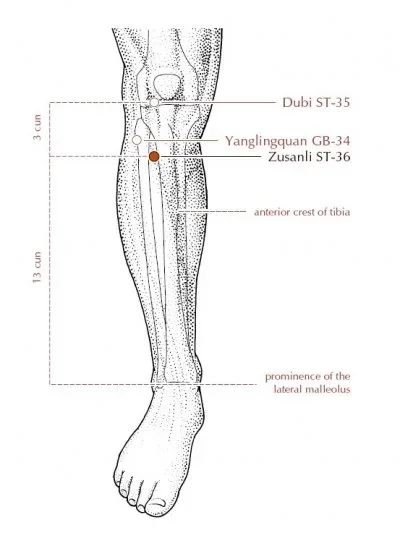
While professional acupuncture treatment is highly effective, you can also stimulate ST36 at home using acupressure. This may be helpful if you want to strenghten your immune system, treat fatigue, treat menstrual discomfort, target digestive issues, or increase vitality to run 3 miles!
Acupressure on ST36
1. Locate the Point: Sit comfortably and find ST36 on your leg. Measure four finger widths below your kneecap and one finger width to the outside of your shinbone.
2. Apply Pressure: Use your thumb or pointer finger to press firmly on the point. You should feel a slight soreness or tingling sensation.
3. Massage: Apply circular pressure for 1-2 minutes. Be sure to maintain consistent pressure and breathe deeply. Inhale lavender or neroli essential oil to promote relaxation.
4. Repeat: Perform this acupressure technique on both legs, ideally twice a day for best results.
Stomach 36 (ST36) is a powerful acupuncture point that can offer a multitude of health benefits, from boosting immunity to improving digestion and increasing energy.
Kidney 3 – Great Mountain Stream
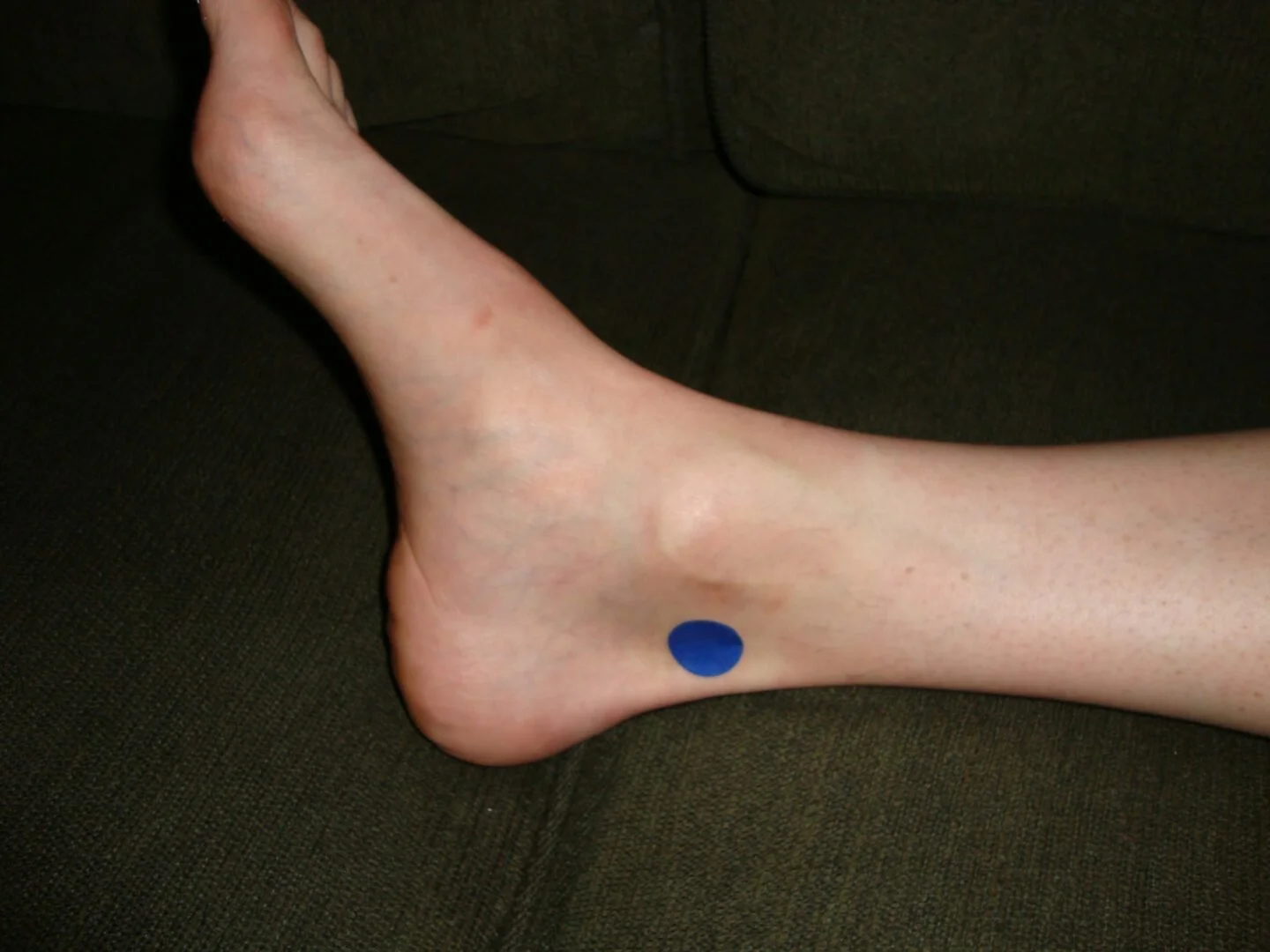
Kidney 3 (KD3), is an acupuncture point located on the inside of the ankle. Positioned between the medial malleolus (the prominent bone on the inside of the ankle) and the Achilles tendon, KD3 plays a vital role in traditional Chinese medicine (TCM) for its ability to balance kidney energy and promote overall well-being.
Benefits of Stimulating Kidney 3
Supports Kidney Health: KD3 is considered the "source point" of the kidney meridian. Stimulating this point can strengthen kidney function, which in Chinese medicine is associated with vitality, stamina, and overall health.
Eases Lower Back Pain: This point is often used to alleviate chronic lower back pain and stiffness, as the kidney meridian is closely linked to the lumbar region.
Improves Energy Levels: In TCM, the kidneys store essential life energy (Qi). Stimulating KD3 can help combat fatigue and restore energy reserves.
Balances Hormones and Reproductive Health: KD3 is beneficial for addressing issues related to hormonal imbalances, fertility, and menstrual irregularities.
Promotes Emotional Stability: The kidneys are thought to govern fear and anxiety in TCM. Working on KD3 can help calm the mind and reduce stress.
Strengthens Bone and Joint Health: Kidney energy is linked to bone health in TCM. Stimulating KD3 may support bone density and alleviate joint pain.
How to Locate and Stimulate KD3
Location: KD3 is situated just behind the inner ankle bone, in the depression between the bone and the Achilles tendon.
Stimulation Techniques
Acupressure: Use your thumb to apply gentle, circular pressure for 1-2 minutes on each ankle. Gradually increase pressure if comfortable.
Acupuncture: A licensed practitioner may use needles to stimulate the point more deeply.
Large Intestine 4: Our Great Eliminator
Body
This point is excellent for supporting the body with pain anywhere in the body, especially the face, head and neck (sinuses, toothaches, earaches, jaw tension, etc.). Additionally, it’s also a great aid in detoxification, i.e. constipation, diarrhea, food poisoning, and even hangovers! (A note of caution: Although LI4 can be awesome to help alleviate pain associated with cramping during menstruation, this powerful point is best to avoid stimulating on pregnant bodies.)
Mind/Spirit
This point supports elimination by nourishing our resources so that we are able to let go with more ease. This point can offer us the calm bridge between what was and what is now. This point is also known as ‘Joining of the Valleys’
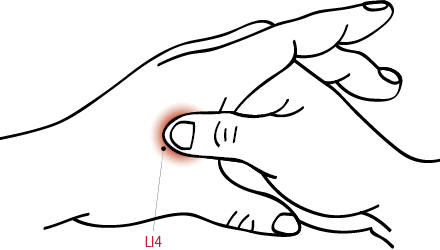
You can find LI4
by locating the fleshy depression just beyond the meeting point where our thumb and first finger bones meet, in a “V” shape. This point is usually a little achy (especially when it needs some love!), which can help us know when we’ve found just the right spot.
Once you find the spot, you can massage it with gentle to moderate pressure in small circular motion for several minutes. Acupressure usually works pretty quickly, so you should feel some relief within the first few minutes. If you are massaging LI4 for a migraine or acute sinus pain, you will likely need to repeat this massage throughout the day if the pain returns.
Pericardium 6
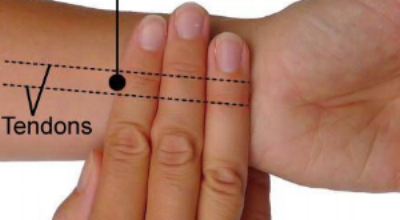
Pericardium 6 is located on the palm side of the wrist a couple of inches toward the body in between the two tendons (palmaris longus & flexor carpi radialis) that run approximately down the centre of the forearm. An easy way to find the point is to place three fingers across your wrist starting at the wrist crease, then look at the point where this line crosses between the two tendons.
What does Pericardium 6 do?
PC6 has a couple of functions which are particularly useful.
First, PC6 is a primary point for treating nausea, no matter the cause. Its effect on nausea is what has earned PC6 the rare distinction of being able to treat a condition without the addition of other points. Whether it is post-operative opioid-induced nausea, motion sickness, pregnancy-related nausea or simply indulging a bit more than you should have, PC6 is the place to start. Some of you may be familiar with the popular "Seabands," Seabands use magnets to activate PC6 and help fight motion sickness.
Another use for Pericardium 6 is to "calm the Shen." In more common language, this translates to calming the mind and reducing anxiety. PC6 also "opens and unbinds the chest." This refers to some of the types of physical symptoms that can be experienced with anxiety such as tightness in the chest and palpitations. Sometimes anxiety can produce nausea as well, in which case PC6 can help on both fronts.
The next time you are feeling anxious or nauseous, try massaging Pericardium 6 to feel better.